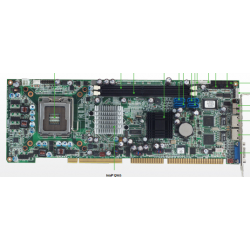
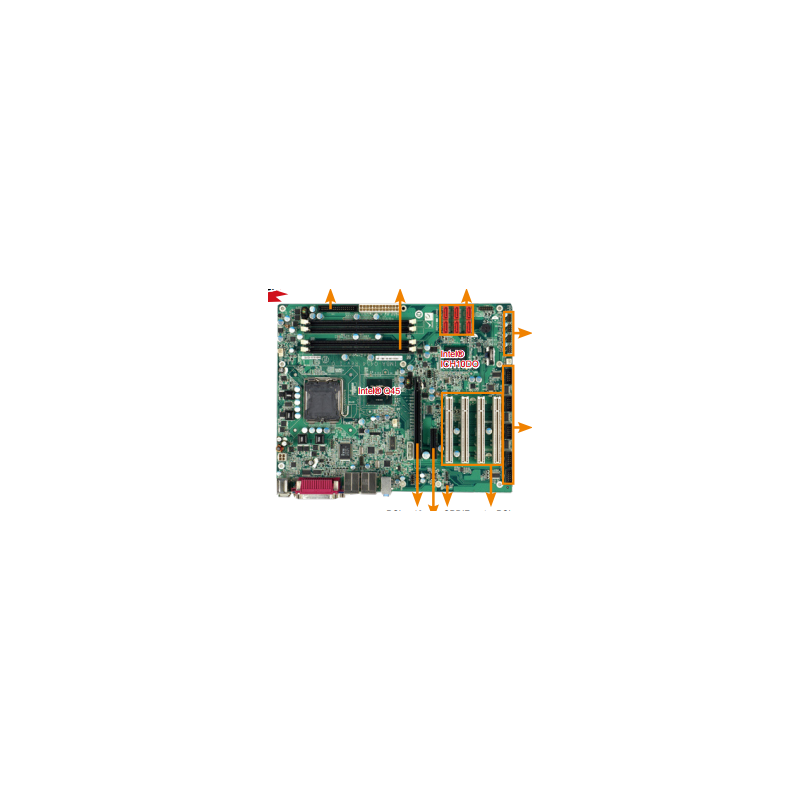

The iEi IMBA-Q454 / IMBA-Q454-R10 is an ATX industrial motherboard designed for industrial automation, OEM control systems, machine control computers, and embedded platforms that require dependable long-term operation, expansion flexibility, and strong legacy platform continuity.
This board supports 45nm Intel Core 2 Duo and Intel Core 2 Quad processors with 1333MHz, 1066MHz, and 800MHz front-side bus (FSB). Built on the Intel Q45 + ICH10DO platform, the IMBA-Q454 is well suited for industrial systems that need stable chipset support, robust storage capability, and reliable communications interfaces.
The IMBA-Q454 / IMBA-Q454-R10 includes a rich industrial I/O feature set with dual Intel Gigabit Ethernet (GbE), six SATA 3Gb/s ports, RAID support, six COM ports, USB, and audio, making it a strong option for maintaining or replacing installed industrial computers without forcing a full system redesign.
At SoftTouch Technologies, we provide iEi IMBA-Q454 / IMBA-Q454-R10 repair, replacement, testing, procurement, and integration support for customers maintaining active and obsolete industrial systems. Whether you need a tested replacement ATX industrial motherboard, board-level repair, or assistance confirming processor, memory, storage, and I/O compatibility, we can help.
The IMBA-Q454 is built for industrial environments that require a dependable ATX industrial motherboard with strong processor support, proven Intel chipset stability, and robust storage and communications connectivity.
Key platform characteristics include:
Because many industrial ATX systems rely on exact BIOS behavior, chipset stability, I/O mapping, and known processor compatibility, repairing the original board or sourcing an exact tested replacement is often the safest and most cost-effective solution.
Many systems built around the iEi IMBA-Q454 / IMBA-Q454-R10 rely on validated BIOS behavior, known processor compatibility, exact I/O mapping, and stable legacy software environments. Replacing the entire platform can require operating system revalidation, peripheral remapping, software changes, and mechanical redesign. In many cases, the best option is to repair the original board or source a tested exact replacement that preserves the existing system architecture.
Before shipment or after repair, we can perform functional validation such as:
You might also like